
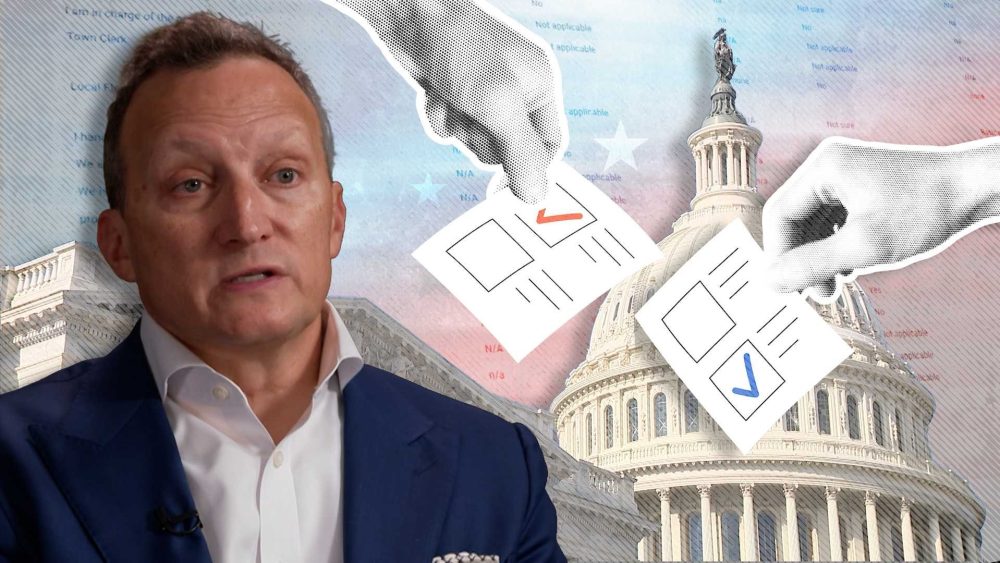
For months, headlines have highlighted the Trump administration’s push to expand authority over elections, raising questions about how these changes might affect the process.
David Becker is the executive director and founder of The Center for Election Innovation and Research. It’s a nonpartisan, nonprofit organization that works with election officials across the country to assist them in their work as they ensure elections that are secure and accessible to all voters. “When people are worried, I understand it. I mean, what they’re reading in the news is that the federal government is just constantly attacking elections,” he said.
The Trump administration has attempted to make significant changes to election processes, including tightening restrictions on mail-in ballots, proposing the SAVE America Act (which would do things like require proof of citizenship to register to vote and a photo ID to cast a ballot in federal elections) and removing commissioners from the Election Assistance Commission. Additionally, lawsuits have emerged in many states, as the Department of Justice seeks access to voter rolls to compare them against immigration data — a move Becker said the federal government lacks authority to pursue.
“The information that the DOJ is seeking includes Social Security numbers, driver’s license numbers and dates of birth. I call those three things the holy trinity of identity theft,” Becker said.
One of the most notable changes, though, is the reduction of CISA’s workforce. Created during President Donald Trump’s first term, the Cybersecurity and Infrastructure Security Agency was tasked with protecting critical physical and cyber infrastructure, including election systems.
“They really earned credibility and respect from the states by hiring real experts in election administration, real experts in cybersecurity who could really provide resources to states that they might not have,” Becker said.
Hearst’s National Investigative Unit interviewed Jen Easterly, former director of CISA, about its relationship with local and state officials back in 2024, before the presidential election. She said, “The good news is the election security community is strong. They’re practiced, they’ve exercised, we’ve built a great partnership with them.”
However, since Trump’s return to the White House, CISA’s workforce has been reduced, and more than a dozen election security workers have been placed on leave.
“This completely wrecked any credibility and trust that had been built up over time. And now if you talk to election officials, Republicans, and Democrats all across the country, they are not looking to the federal government for any kind of support,” Becker said.
A survey conducted by the National Investigative Unit was sent out to more than 7,500 state and local election officials, with 430 responding. While three-quarters of respondents said changes in federal election security support had not affected their office’s preparation for the 2026 midterms, some reported reduced contact with CISA, fewer security training opportunities or limited access to services. A couple of election workers said their requests for assistance from CISA received little to no response.
We shared the results of our survey and asked for an interview with CISA, but it was declined. A spokesperson did provide a comment, which read in part:
“Election security is national security, and protecting our critical infrastructure remains a top priority for the Trump Administration. The Department of Homeland Security and the Cybersecurity and Infrastructure Security Agency continue to work hand in hand with state leaders every single day to protect the integrity and security of our elections.
“Upon request, CISA provides state and local election officials and election vendors with no-cost, voluntary services, including technical expertise, vulnerability scanning, and resilience-building support.”
The agency claims the changes in the organizational structure have not changed CISA’s commitment to supporting election officials.
Ultimately, the federal government is supposed to have no role in election administration. The Constitution says state legislatures and the states run elections. Congress can also pass laws regarding elections, like the Voting Rights Act and the National Voter Registration Act.
“The federal government can help states prepare for elections, but state and local officials run and oversee them,” Becker said.
One thing many experts have pointed out to the National Investigative Unit in the past is that those who run elections are neighbors in our communities. Experts worry that the political noise surrounding the attempts of the federal government will discourage trust in the process and voter participation.
Becker adds that the real message to voters is to “tune out a lot of the noise because none of this is having a real effect on the hard work of election officials.”
He says, “Voting is incredibly safe, convenient and secure in this country. The best way to push back on those who are worried about the verdict in November is to break a record for turnout and have as many voters turn out and vote.”


